

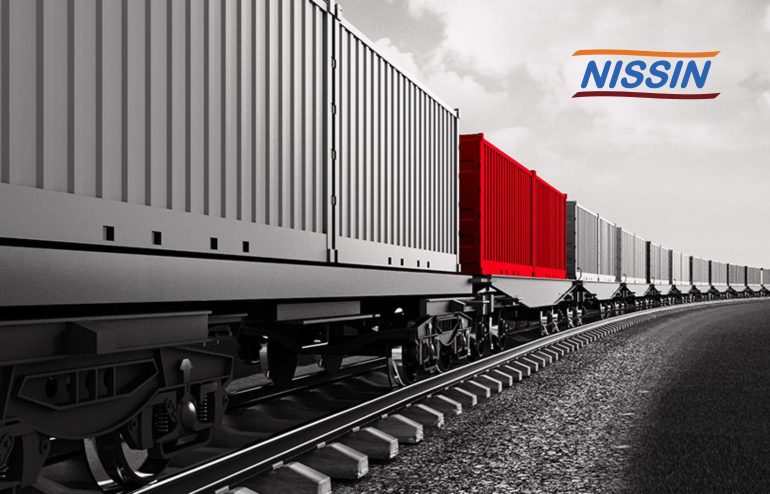
The Role of Rail Freight in Sustainable European Logistics
As businesses across Europe work towards more sustainable supply chains, transportation strategies are evolving. Rising environmental expectations, increasing road congestion and growing pressure to reduce carbon emissions are encouraging companies to rethink how goods move across the continent.
While road transport remains essential for flexibility and last-mile delivery, rail freight is becoming an increasingly valuable part of European logistics networks.
Rather than replacing other transport modes, rail strengthens multimodal supply chains by offering a reliable and lower-emission solution for long-distance transport.
This blog explores the benefits of rail freight, when it makes sense as a transport solution, and how it can contribute to more sustainable European supply chains.
Why Rail Freight Is Gaining Importance
For many years, road transport has dominated European freight movement. In recent years, however, rail freight has gained increasing importance across Europe. Improvements in European rail infrastructure, greater cross-border connectivity and increasing investment in sustainable transport corridors are making rail freight a more viable option for many businesses than it was just a decade ago.
Rail freight offers several advantages, including:
- greater transport capacity for high-volume cargo,
- lower CO₂ emissions,
- reduced road congestion,
- predictable transit schedules,
- and efficient long-distance transport.
For businesses looking to improve their environmental performance without compromising operational reliability, rail has become an attractive option.
Supporting More Sustainable Supply Chains
Sustainability is no longer only about reducing emissions. Companies increasingly evaluate their supply chains based on resilience, efficiency and long-term resource management.
Rail freight contributes to these objectives by enabling businesses to transport larger shipment volumes with a lower environmental impact than road transport alone.
Combined with road transport for first and last-mile delivery, rail supports logistics strategies that balance operational performance with sustainability goals.
When Does Rail Freight Make the Most Sense?
Rail freight is not the right solution for every shipment, but it can offer significant advantages for specific transport requirements.
It is particularly well suited for:
- long-distance transport across Europe,
- high-volume or heavy cargo,
- regular transport flows between fixed locations,
- businesses looking to reduce their carbon footprint,
- and shipments where transit time is important but not as critical as air freight.
By selecting the right transport mode for each shipment, businesses can balance cost, sustainability and operational efficiency more effectively.
Rail Freight as Part of a Multimodal Strategy
Rail delivers the greatest value when integrated into a broader logistics network.
A typical shipment may move by ocean freight or air freight into Europe, continue by rail to a regional distribution hub and complete its journey by road. This coordinated approach allows businesses to optimize costs, reduce emissions and improve supply chain resilience without relying on a single transport mode.
As supply chains become increasingly interconnected, multimodal logistics is becoming the preferred strategy for many industries.
Overcoming Common Challenges
Despite its benefits, rail freight also presents operational considerations.
Companies must evaluate:
- network availability,
- terminal accessibility,
- transit planning,
- shipment coordination,
- and cross-border operations.
With proper planning and coordination, these challenges can often be addressed effectively, allowing businesses to benefit from rail freight as part of a reliable long-term logistics strategy.
Working with an experienced logistics partner can also help businesses determine when rail is the right solution and how it can be integrated effectively into existing supply chains.
Building the Future of European Logistics
The future of European logistics will rely on a balanced combination of transport modes. Rail freight is expected to play an increasingly important role in helping businesses reduce emissions, improve operational resilience and meet evolving sustainability targets.
At Nissin Transport Belgium, we help businesses determine when rail freight is the right choice for their supply chain. Whether used as a standalone transport solution or integrated into a multimodal strategy, rail freight can help reduce emissions, improve efficiency and build more resilient European supply chains.
Looking to optimize your European transport strategy? Discover how rail freight can support a more sustainable, efficient and resilient supply chain. Contact our logistics specialists to explore the right solution for your business.
